Creativity, Trust, and Postplagiarism
How GenAI is Reshaping Educational Practice
GenAI has moved from novelty to everyday infrastructure in education, whether it is endorsed or not. Rather than focusing on speculative futures such as artificial general intelligence, this webinar examines how current forms of GenAI are already reshaping learning practices, assessment and academic norms.
Drawing on the concept of postplagiarism and original survey data on postsecondary students’ perceptions of creativity, this session explores a central tension: While AI tools gain traction because of their convenience, students increasingly perceive them as creativity-enhancing at the level of learning and understanding, even when the ideas involved appear routine to experts. At the same time, perceived creativity does not always align with measurable changes in creative academic practice.
This session situates these findings within a broader conceptual discussion of trust in AI as a cognitive artifact, distinguishing between competitive and complementary forms of trust and their implications for creativity in learning. Building on ideas previously presented in the Postplagiarism Speaker Series, participants in this webinar will leave with a clearer framework for understanding creativity as a core tenet of postplagiarism and for navigating the practical implications of AI use in teaching and learning.
Key takeaways:
- AI in education is already reshaping practice. The session focuses on GenAI as it exists today, not speculative discussions of AGI or ASI, and examines how current tools challenge assessment, learning design and academic norms.
- Convenience explains adoption, but learner insight explains persistence. Students continue using AI not only because it is efficient, but because it supports moments of understanding that are new and meaningful to them, even when those ideas appear routine to experts.
- Creativity is a core tenet of postplagiarism, understood developmentally. Postplagiarism foregrounds creativity as learner-centred meaning-making rather than expert-level originality alone.
- Perceived creativity and measurable creative outcomes do not always align. Students may experience AI-supported learning as creative without clear evidence of deeper or more original academic work.
![logo contact north]() |
This event is organized and managed by Contact North. You will be redirected during the registration process. If you require technical support, please communicate directly with Contact North. This webinar is offered as free additional resources. The opinions expressed in it do not necessarily reflect the views of the TLSS or the University of Ottawa.
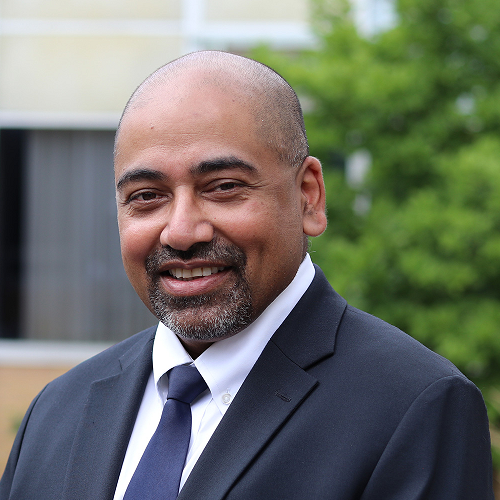
Assistant Professor
Department of Educational Studies, Faculty of Education
Brock University
Dr. Rahul Kumar teaches and researches in the areas of postsecondary and adult education, focusing on how generative artificial intelligence is reshaping teaching, learning, and academic integrity. His work aims to support educators and institutions in maintaining trust, fairness, and quality while adapting to technological change. Through publications, editorial work, and international presentations, he has advanced scholarship and policy on these issues and aims to guide the responsible adoption of AI in education worldwide. Prior to academia, he worked in the IT industry for 22 years.
Event details
|
Start date |
Tuesday, February 17, 2026 - 11:00 am - 12:00 pm |
|
Duration |
60 min |
|
Seats available |
300 |
|
Organizer |
Contact North |
|
Audience |
Professors |
|
Language |
English event |
|
Delivery mode |
Online via Zoom |
|
Location |
Online via Zoom (Contact North Webinars)
|