Generative and increasingly agentic AI are challenging educators to rethink what, how and why we assess. As AI systems become more capable of producing polished work and completing complex tasks, assessment focused primarily on final products may tell us less about what students actually understand, can do and are learning along the way.
This webinar explores how open pedagogy can help educators respond by shifting greater attention from product to process and by designing learning experiences that strengthen learner agency, intrinsic motivation and metacognition. Open pedagogical approaches can give learners greater voice and choice, invite them to pursue meaningful questions, work with and create open educational resources, collaborate with others and contribute knowledge that has value beyond the classroom.
These approaches are especially relevant in an age of AI because they make learning more visible. They create space for productive struggle, iteration, feedback, reflection and skill development, while helping educators make more intentional decisions about when AI can extend learning, when it may displace important cognitive or creative work and when students need to demonstrate capabilities independently.
The session also considers how open pedagogy can provide a more equitable alternative to responses centred on surveillance, detection and policing. Participants will explore practical ways to design more authentic, participatory and meaningful assessment while strengthening confidence in student learning.
Key takeaways
Participants will:
- Explore why generative and agentic AI are accelerating a shift from product-focused assessment toward greater attention to process, judgment, reflection and skill development
- Understand how open pedagogy can strengthen learner agency, intrinsic motivation and meaningful engagement through voice, choice and authentic participation
- Examine how productive struggle, iteration, feedback and metacognition can support deeper learning and make skill development more visible
- Explore how open educational resources and open pedagogical practices can position students as contributors, collaborators and creators
- Consider how authentic, participatory assessment can provide a more equitable alternative to surveillance and detection while helping educators decide when AI should support, extend or remain outside the learning process
-
![logo contact north]() |
This event is organized and managed by Contact North. You will be redirected during the registration process. If you require technical support, please communicate directly with Contact North. This webinar is offered as free additional resources. The opinions expressed in it do not necessarily reflect the views of the TLSS or the University of Ottawa.
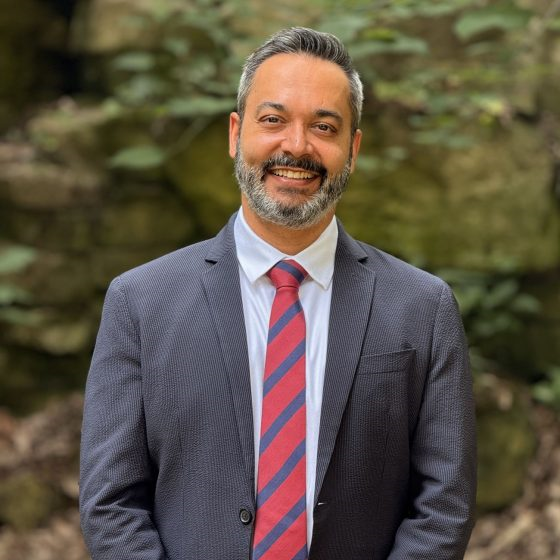
Vice Provost, Teaching and Learning
Brock University
Dr. Rajiv Jhangiani is Vice Provost, Teaching and Learning at Brock University in St. Catharines, Ontario, where he is a Professor of Educational Studies with a cross-appointment in Psychology and directs the Inclusive Education Research Lab. An award-winning educator and internationally recognized leader in open education, his work focuses on open educational practices, student-centred pedagogies, assessment and ethical approaches to educational technology and artificial intelligence. The architect of Canada’s first “zero textbook cost” (ZTC) degree programs, Dr. Jhangiani has delivered keynotes and workshops and collaborated with educators and institutions across North America, Europe, Africa, South Asia, the Middle East and Australia.
He has served as a Distinguished Visiting Teaching Scholar at Trent University in Canada and as a Visiting Scholar at Munster Technological University and Dublin City University in Ireland. He has advised the British Columbia government on digital learning, micro-credentials and ethical educational technology, and contributed to sector-wide work on open educational practices in Ireland. He previously served as an Ambassador for the Global Advocacy of OER with the International Council for Open and Distance Education and on the Board of Open Education Global. He is incoming Board Chair of the Canadian Digital Learning Research Association.